Observe before interpreting
Slow down and notice what the text actually says before deciding what it means.
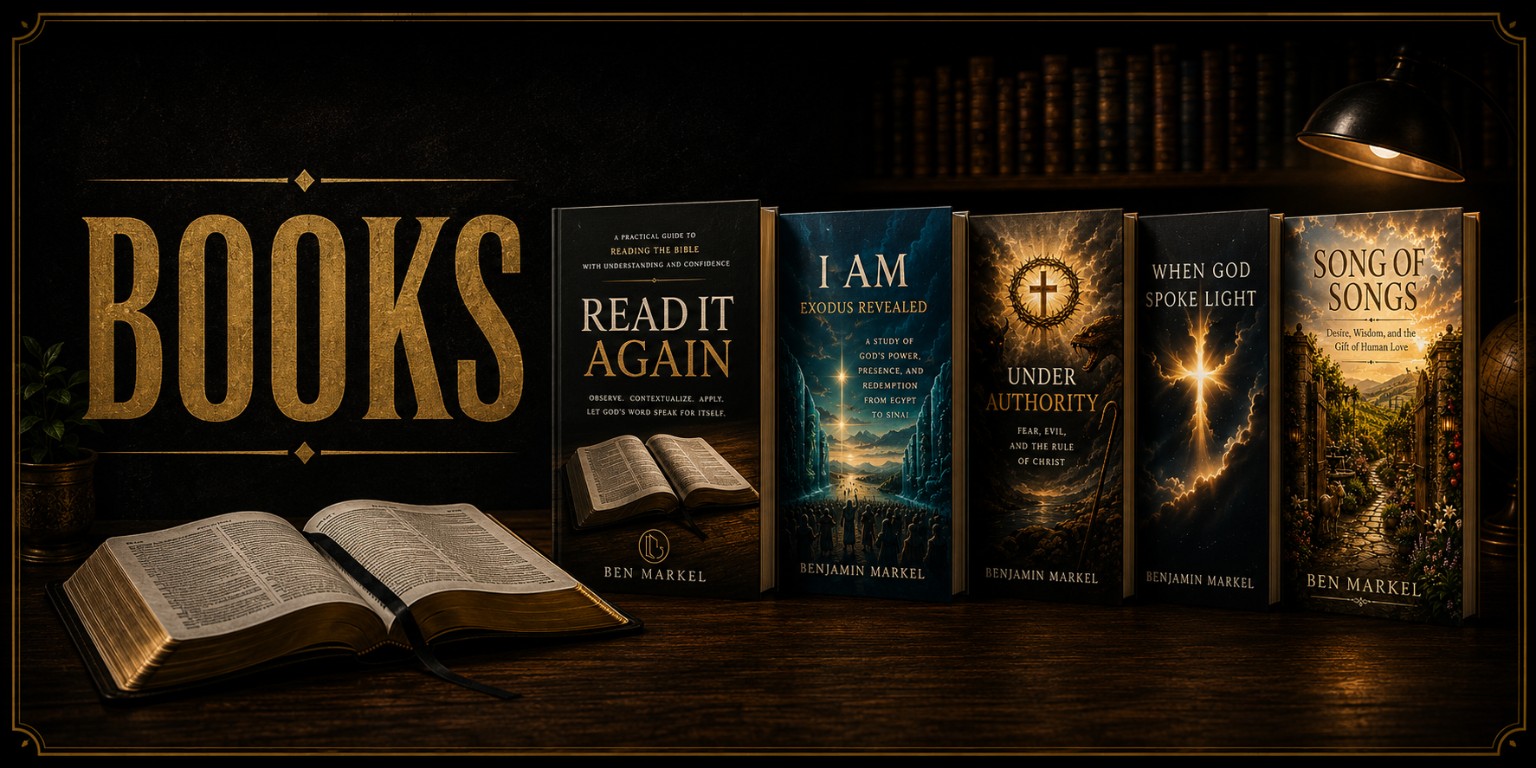
Available now
A practical guide to reading Scripture in context, avoiding common interpretive mistakes, and letting God’s Word speak for itself.
Why read it again?
Every day, Christians hear sermons, watch videos, read articles, and share verses online. Most of us want to understand God’s Word faithfully—but it is easy to make assumptions, miss the context, or repeat what we have always been told without asking whether that is really what the passage says.
Read It Again introduces practical hermeneutics without secret knowledge or complicated academic theories. It is written for ordinary Christians who want to slow down, observe carefully, and read the Bible with greater confidence and humility.
What you’ll learn
Slow down and notice what the text actually says before deciding what it means.
Follow the author’s argument, the surrounding passage, and the whole book.
Read poetry as poetry, narrative as narrative, and letters as letters.
Test familiar slogans and isolated verses against their actual setting.
Move from meaning to application without making the text say more than it says.
“Because sometimes the best thing you can do is simply read it again.”
About the author
Ben Markel is a husband and writer who loves God’s Word and believes ordinary Christians can learn to read it carefully. He is not a seminary professor or a pastor. His work grows from the conviction that believers should be equipped to examine Scripture for themselves rather than simply repeating familiar claims.
Through books, articles, and future resources, his goal is to encourage thoughtful Bible reading that pays attention to authorial intent, context, genre, and the difference between what the text says and what tradition may have added to it.
Future projects
In development
A biblical look at how Christians answer questions Scripture does not directly answer—and how to distinguish faithful inference from speculation.
In development
An examination of the interpretive method behind modern dispensational theology and whether its conclusions follow from Scripture or from assumptions brought to the text.